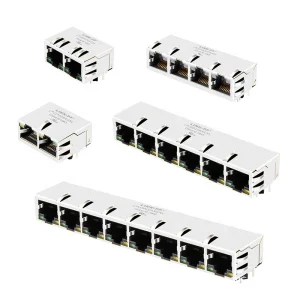
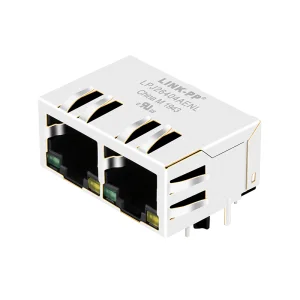
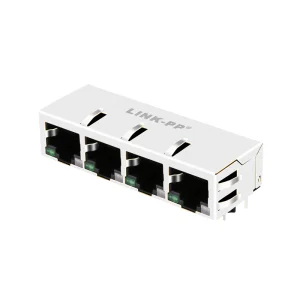
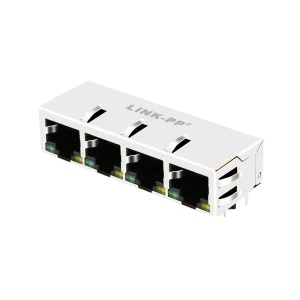
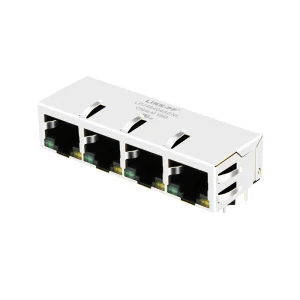
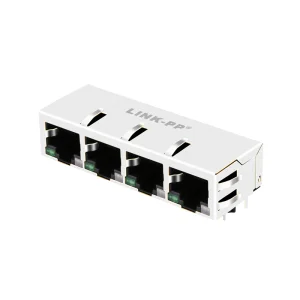
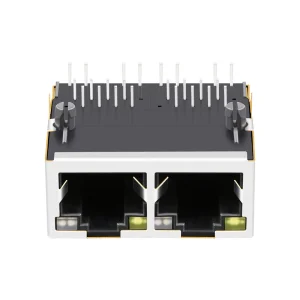
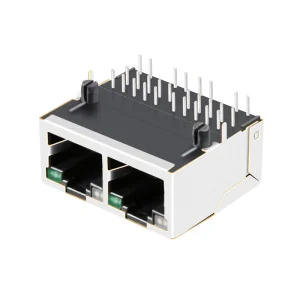
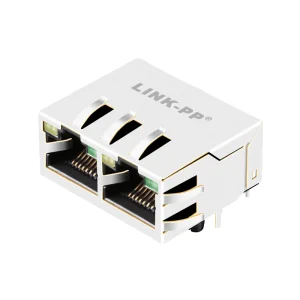
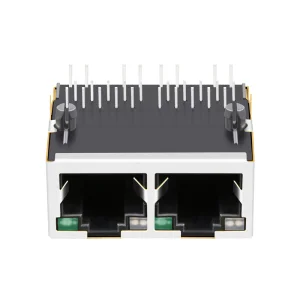
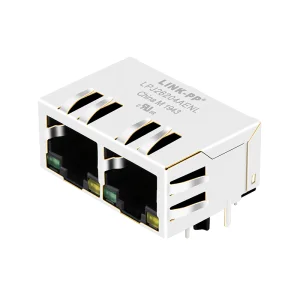
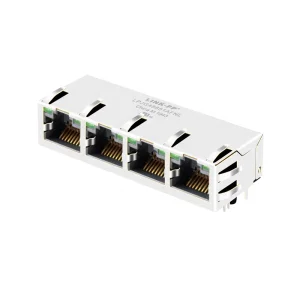
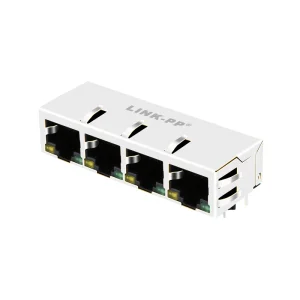
PCB mountable ethernet sockets optimized for telecom, edge routing, and data center infrastructures.
The global interconnect market is undergoing a structural transition driven by the expansion of edge-computing facilities, 5G base station deployments, and intelligent factory floor retrofits. Within this ecosystem, the multi-port RJ45 female connector serves as a crucial physical-layer anchor, enabling dense copper-based Ethernet drops on high-throughput switches and industrial control boards.
Traditional routing hardware relied on discrete components—individual single-port RJ45 connectors wired alongside separate isolation transformers and common-mode filters. Modern design architectures, however, systematically demand Integrated Connector Modules (ICMs) or Multi-Port MagJacks. These highly integrated modular arrays combine shielding, ESD protection, isolation magnetic coils, and indicators into a single compact housing. This shift saves up to 40% of valuable PCB layout space and enhances signal integrity at the physical interface.
From an enterprise procurement perspective, sourcing engineers look beyond pin geometry to analyze EMI resilience, temperature profiles, and mating cycles. The choice of multi-port configurations directly influences thermal dissipation patterns inside high-density 1RU switches. Choosing modular blocks that incorporate advanced internal shielding tabs guarantees optimal grounding and lowers electromagnetic leakage.
As data demands scale, multi-gigabit Ethernet (2.5G/5G/10G Base-T) routes require shielded Cat6a pathways. Quality multi-port RJ45 systems maintain transmission integrity up to 500 MHz, matching or exceeding international mechanical standards (IEC 60603-7).
Exploring the structural design features that ensure signal integrity, ESD tolerance, and reliable industrial power delivery.
Incorporates copper alloy shields with nickel-plated outer layers, multiple grounding fingers, and integrated TVS diode arrays to ground transient electrostatic discharges before they disrupt internal PHY transceivers.
Features high-permeability toroidal cores hand-wound with triple-insulated wires. Confirms 1500V AC isolation between the line side and terminal side, compliant with IEEE 802.3 rules.
Embedded status LEDs (Green, Yellow, or Bi-color) simplify visual link checking. Supports Power over Ethernet (PoE, PoE+, PoE++) up to 90W without causing heat buildup or saturation in the magnetic cores.
Compare physical characteristics, frequency ranges, and applications across standard ganged models.
| Connector Type | Mating Layout | Bandwidth Limit | PoE Support | Primary Industrial Use Cases | Compliance Rating |
|---|---|---|---|---|---|
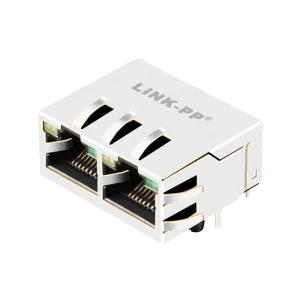
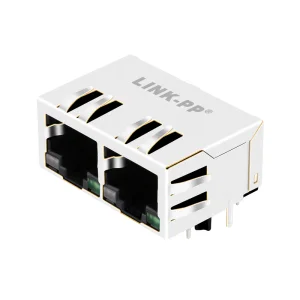
| 1x2 Port MagJack | Horizontal Ganged | 100/1000 Base-T | PoE+ (30W) | Industrial IPCs, SOHO Routers, Micro-Servers | RoHS / UL94-V0 |
| 1x4 Port MagJack | Horizontal Ganged | 1G / 2.5G Base-T | PoE++ (60W) | Enterprise Switches, Firewalls, Base Stations | RoHS / REACH |
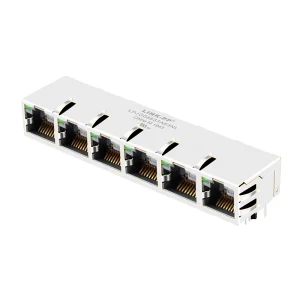
| 1x6 Port Shielded | Tab Up/Down Ganged | Up to 5G Base-T | Non-PoE / PoE Opt. | Telecom Access Multiplexers, Optical Line Terminals | RoHS / UL |
| 1x8 Port Cat6a RJ45 | High Density Ganged | 10G Base-T (500MHz) | PoE++ (90W) | Top-of-Rack Data Switches, Enterprise Core Hubs | RoHS / FCC Part 68 |
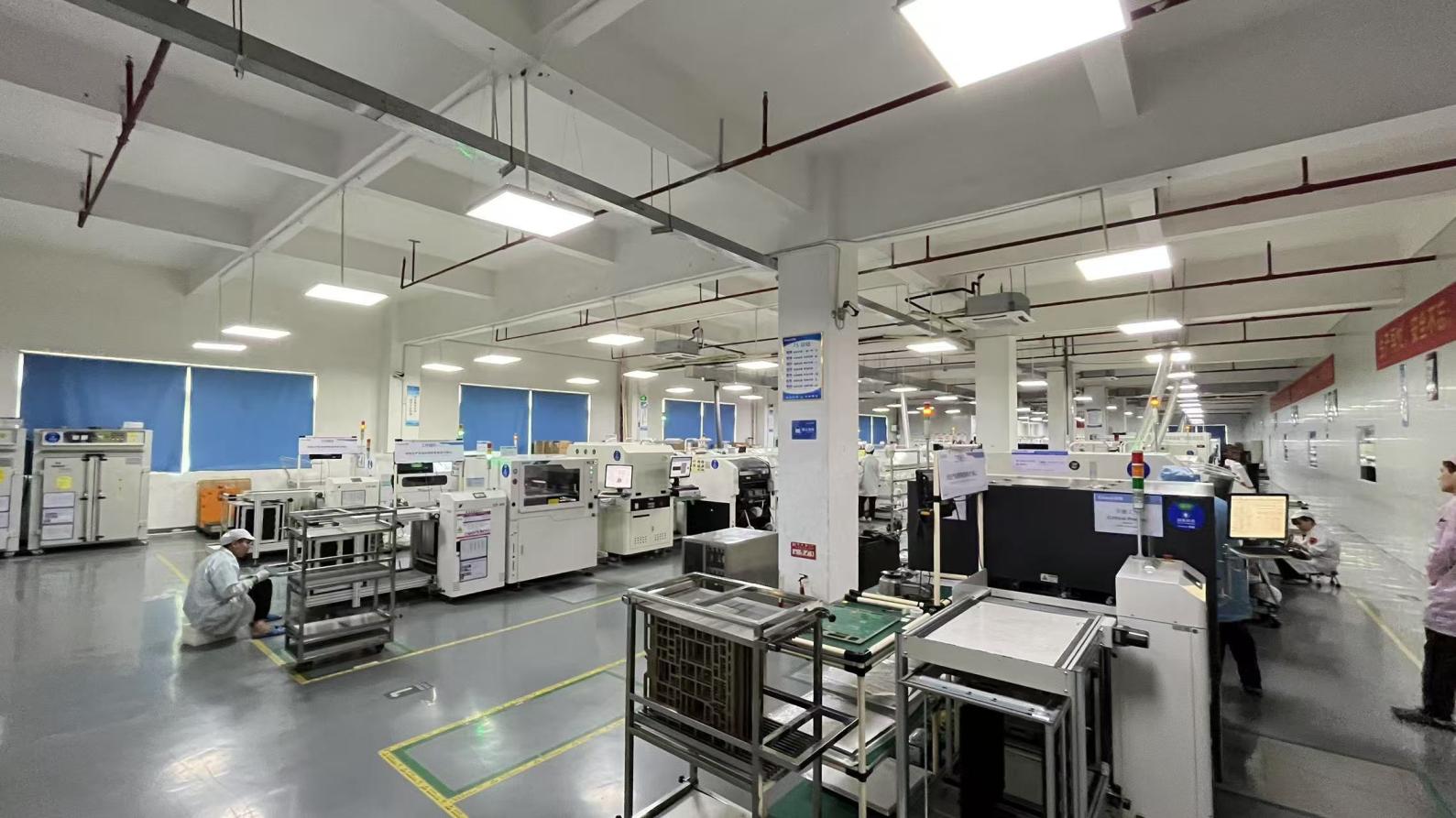
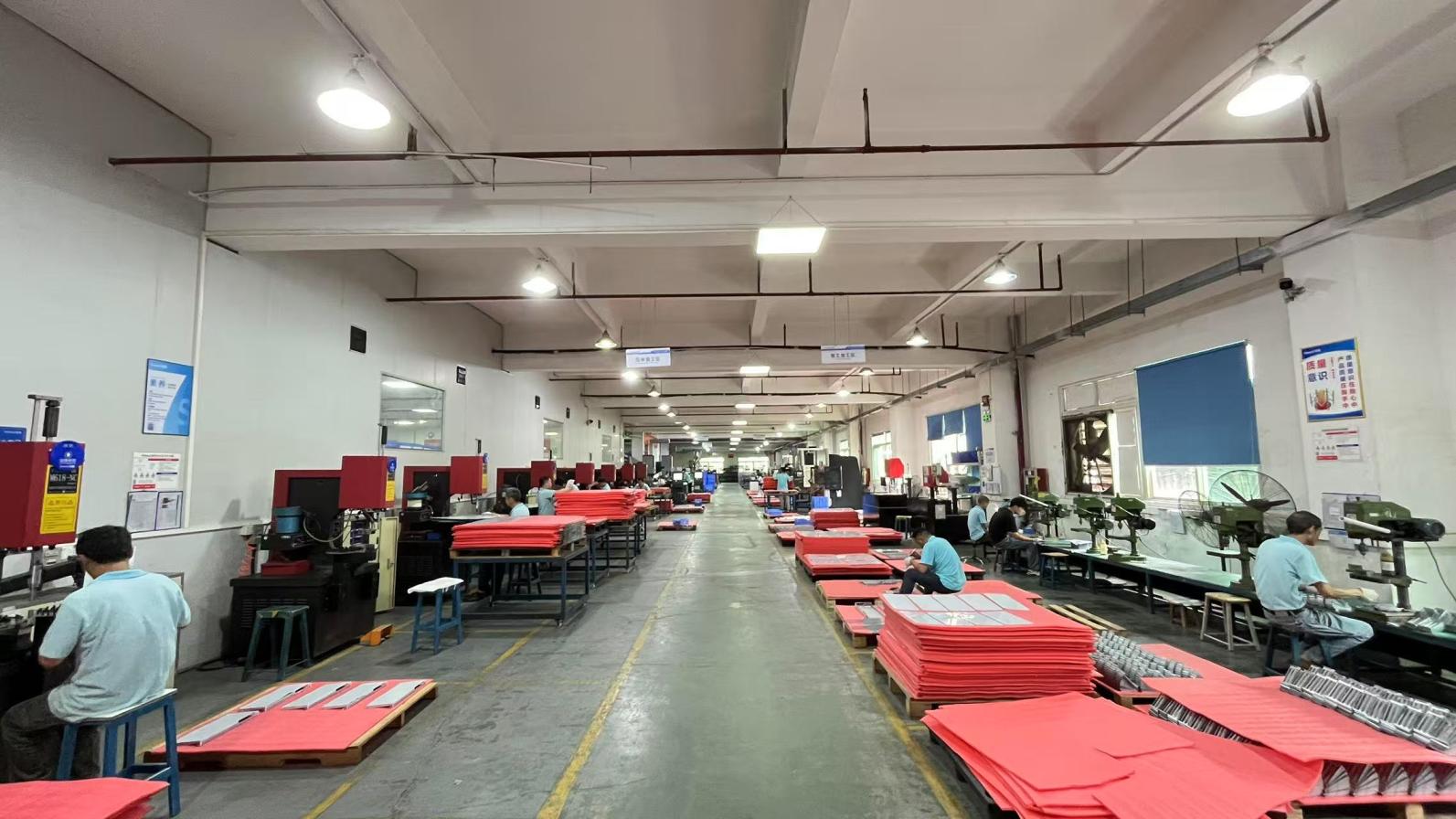
Founded in 2016, FiberNova Optical Communication Tech Co., Ltd. (FiberNovaTransceivers.com) manufactures advanced connectivity hardware. From our modern 380㎡ plant, we deliver high-performance optical and copper networking interfaces to data centers and telecom clients worldwide.
With 12 years of industry expertise and 6 years of export experience, FiberNova operates as a global supplier with annual exports valued between USD 8 million and 15 million. We support cloud operators, telecom service providers, and equipment distributors in North America, Europe, Southeast Asia, and the Middle East.
Fully certified compatibility across major platforms: IEEE, MSA, FCC Part 68, RoHS, and CE guidelines.



Deploying high-density modular copper interfaces in demanding, mission-critical infrastructure fields.
Simplifies connections between optical backbone lines and copper server nodes, ensuring low-latency 10G Base-T links in standard 1RU racks.
Heavy shielding prevents EMI interference from motor drives, while ruggedized gold contacts resist corrosion in high-vibration factory settings.
Integrates high-efficiency isolation transformers directly into multi-port modular blocks to protect core boards from power surges on outdoor drop lines.
Mapping the path to higher data throughput, advanced power delivery, and smart status diagnostics.
As data rates pass 1Gbps, copper wire pairs face complex crosstalk issues. Our design roadmap concentrates on optimizing internal leadframe geometries to isolate adjacent ports and minimize NEXT. Integrating low-pass filters inside MagJack housings permits clean transmissions up to 500 MHz, making Cat6a solutions reliable for commercial deployment.
Delivering up to 90 watts of DC power alongside high-speed data creates thermal challenges. Future designs employ heavier gauge internal wiring and contact pins made of specialized phosphor bronze alloys. Standardizing on 50 micro-inches of gold plating prevents contact corrosion caused by electrical arcing when plugging and unplugging active lines.
Expert responses addressing physical interface specs, noise mitigation, and assembly standards.
A discrete layout places the RJ45 physical port, the isolation transformer, and the common-mode choke as separate parts on the PCB. In contrast, an Integrated Connector Module (ICM) or MagJack houses all these magnetic, filtering, and isolation components within the connector's metal shielding. Combining these elements saves up to 40% of board space, simplifies trace routing, reduces trace parasitic capacitance, and improves EMI compliance.
Gold plating protects copper contacts from oxidation and wear during insertion. Standard connectors offer flash gold or 15 micro-inches (µin). For industrial and telecom hardware, a thickness of 50 µin is recommended. This level of plating resists oxidation, tolerates up to 5,000 mating cycles, and maintains low contact resistance in harsh chemical or high-humidity environments.
At high frequencies, Near-End Crosstalk (NEXT) and Far-End Crosstalk (FEXT) between adjacent ports increase significantly. Thermal noise and return loss can also degrade signal quality. High-end multi-port connectors address this by using internal vertical shield plates between ports, optimizing PCB trace pin layouts, and twisting internal signal wires to maintain signal-to-noise margins.
Tab-Up and Tab-Down refer to the orientation of the RJ45 plug's retention lock. Choosing between them depends on your PCB layout and mechanical enclosure. A Tab-Up layout allows designers to place LEDs on the top, making status lights easily visible. A Tab-Down layout is often chosen to simplify PCB traces, letting differential pairs run directly to physical-layer transceiver chips.
Shielded modular connectors and harmonica jacks built for high-performance networks.
 FiberNova