Uruguay has established itself as the digital epicenter and leading software hub of South America. Driven by progressive government initiatives, high literacy rates, and proactive telecommunications investments led by the state utility ANTEL (Administración Nacional de Telecomunicaciones), Uruguay boasts the highest broadband penetration rates and the most comprehensive fiber-to-the-home (FTTH) network deployment in the Latin American region. Projects such as Google's new hyperscale data center in the Canelones region and the growth of Zonamerica as a tech-focused free trade zone highlight the country's surging demand for high-density, reliable, and high-speed network connections.
As Uruguayan systems integrators, internet service providers (ISPs), and industrial engineering firms expand their digital footprint, they face the ongoing challenge of hardware scaling. In modern networking architectures—spanning from smart grid monitoring systems in the agricultural interior (Pampa region) to high-throughput blade servers in Montevideo's data centers—board space is a premium resource. Stacked Port RJ45 Connectors (also known as double-layer, 2xN layouts) present the ideal structural solution, allowing designers to double the density of Ethernet ports on a single network interface card (NIC) or motherboard.
Our company, as a pioneer in optical communication interfaces and high-speed copper connectivity solutions, supplies Uruguayan enterprise buyers with ruggedized, high-performance Stacked RJ45 Integrated Connector Modules (ICMs). These products are engineered to withstand the challenging climatic conditions of Uruguay, which range from humid maritime air along the coastal strip of Punta del Este and Montevideo to agricultural dust in inland processing sectors.
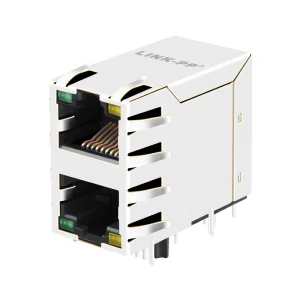
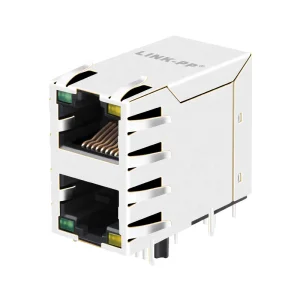
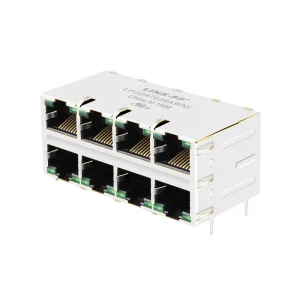
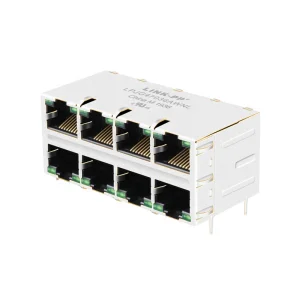
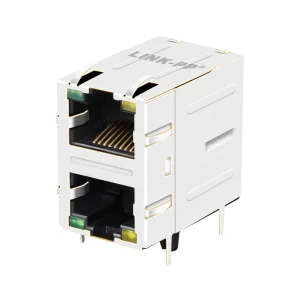
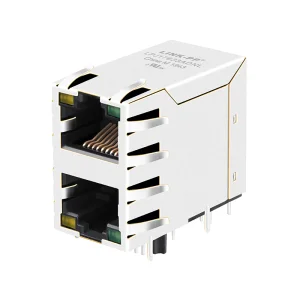
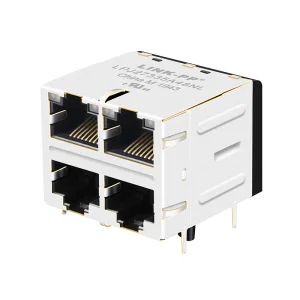
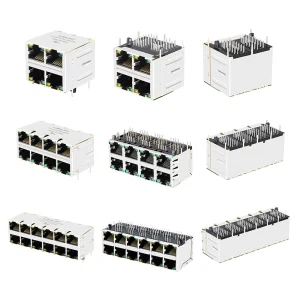
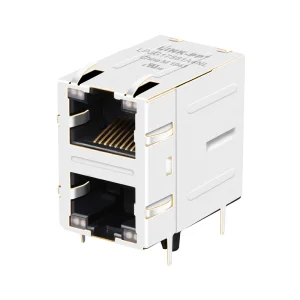
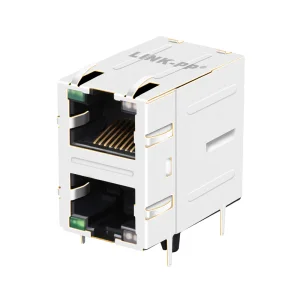
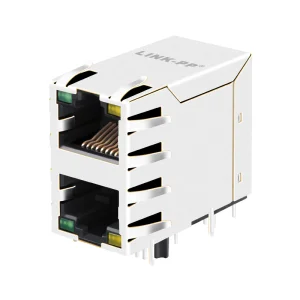
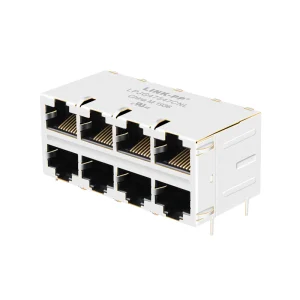
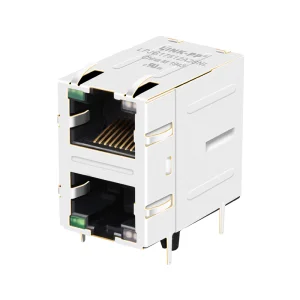
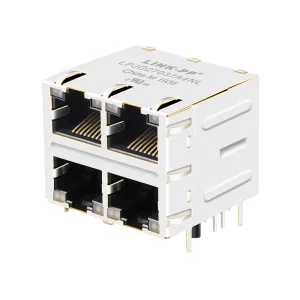
In high-frequency network engineering, a connector is no longer a simple mechanical interface. It is a complex component responsible for signal integrity, electromagnetic shielding, and electrical safety. The Stacked RJ45 connector stacks two rows of female RJ45 jacks atop one another (e.g., 2x1, 2x2, 2x4, 2x8 port configurations), offering major advantages over standard single-row layouts:
By nesting ports vertically, hardware engineers save up to 50% of the horizontal board real estate, leaving critical PCB routing channels open for microprocessors and power lanes.
Built-in isolation transformers, chokes, and capacitors filter out common-mode noise, preventing signal corruption and protecting vulnerable PHY chips from power surges.
Our connectors are fully certified for 100M, 1G, 2.5G, 5G, and 10G transmission rates, compliant with IEEE 802.3 standards for high-bandwidth deployment.
By combining filtering components into a single mechanical frame, stacked connectors eliminate the need for discrete magnetics on the PCB. This significantly simplifies board routing, minimizes parasitic capacitances, and reduces the bill-of-materials (BOM) complexity for original equipment manufacturers (OEMs).
To fully capitalize on Uruguay's geographical and economic benefits, industrial networks must rely on robust hardware components. Our stacked RJ45 connectors are designed for the following applications across the Uruguayan market:
As Montevideo establishes itself as a digital services hub for LATAM, data centers require high-density switches. Our 2x4, 2x6, and 2x8 10G Base-T stacked connectors allow switch manufacturers to pack up to 48 ports in a 1U rackmount chassis. Equipped with heavy EMI shielding and robust grounding tabs (EMI fingers), these connectors prevent packet loss and channel crosstalk even under heavy data loads.
Uruguay's agricultural industry relies on smart monitoring nodes, automated silos, and tracking gateways. Hardware deployed in rural areas must withstand temperature fluctuations and power fluctuations. Our integrated connectors with built-in surge protection (up to 6kV) protect sensitive telemetry equipment from atmospheric electrical disturbances, securing long-term performance.
From Montevideo's port security to smart urban surveillance networks in cities like Salto and Paysandú, Power over Ethernet (PoE) technology is standard. Our 2x1 and 2x4 stacked RJ45 jacks support PoE and PoE+ (IEEE 802.3at/bt) standards, delivering up to 30W/60W of power per port directly to PTZ cameras and wireless access points over standard Ethernet cabling, without overheating the internal transformer windings.
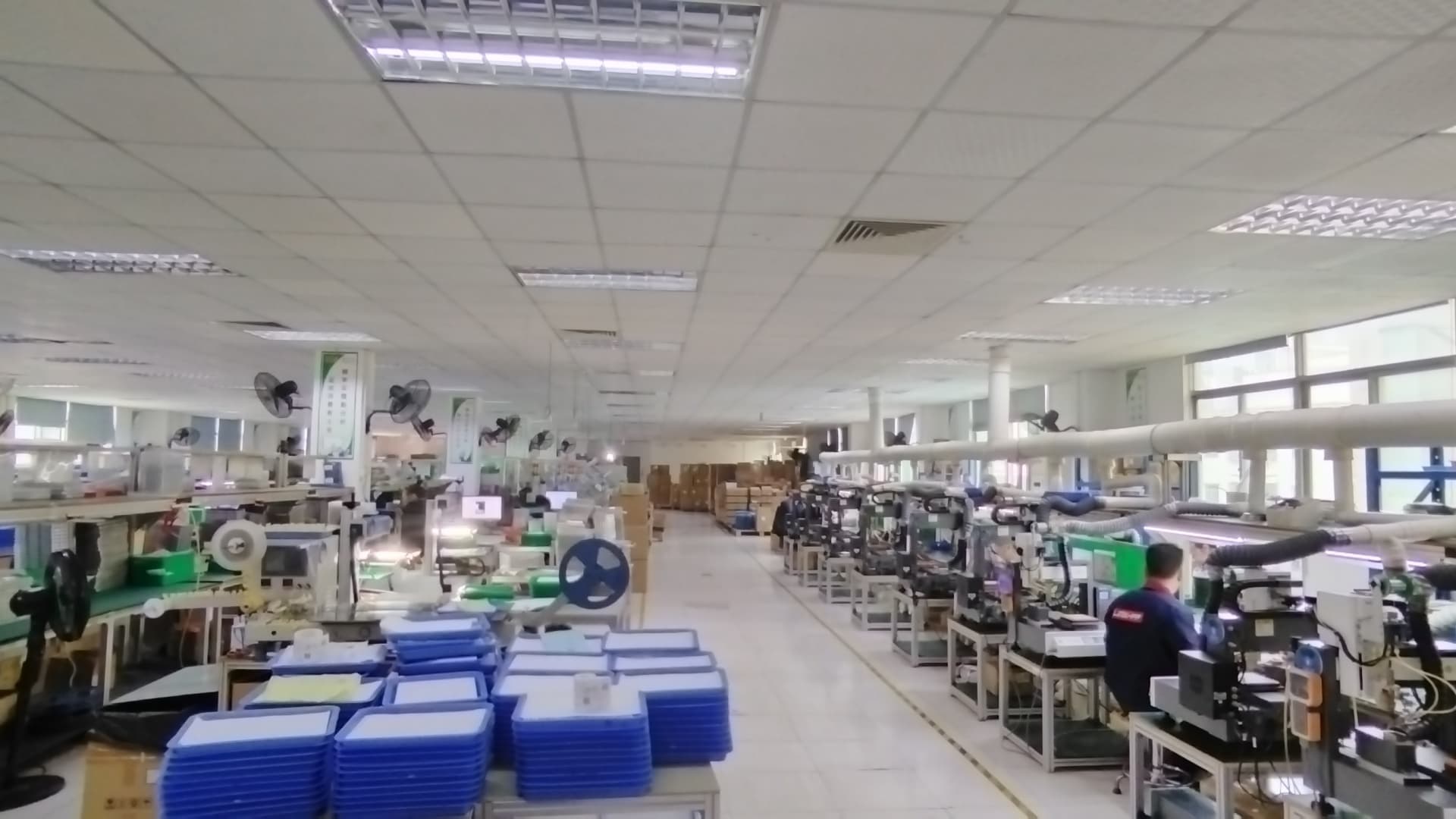
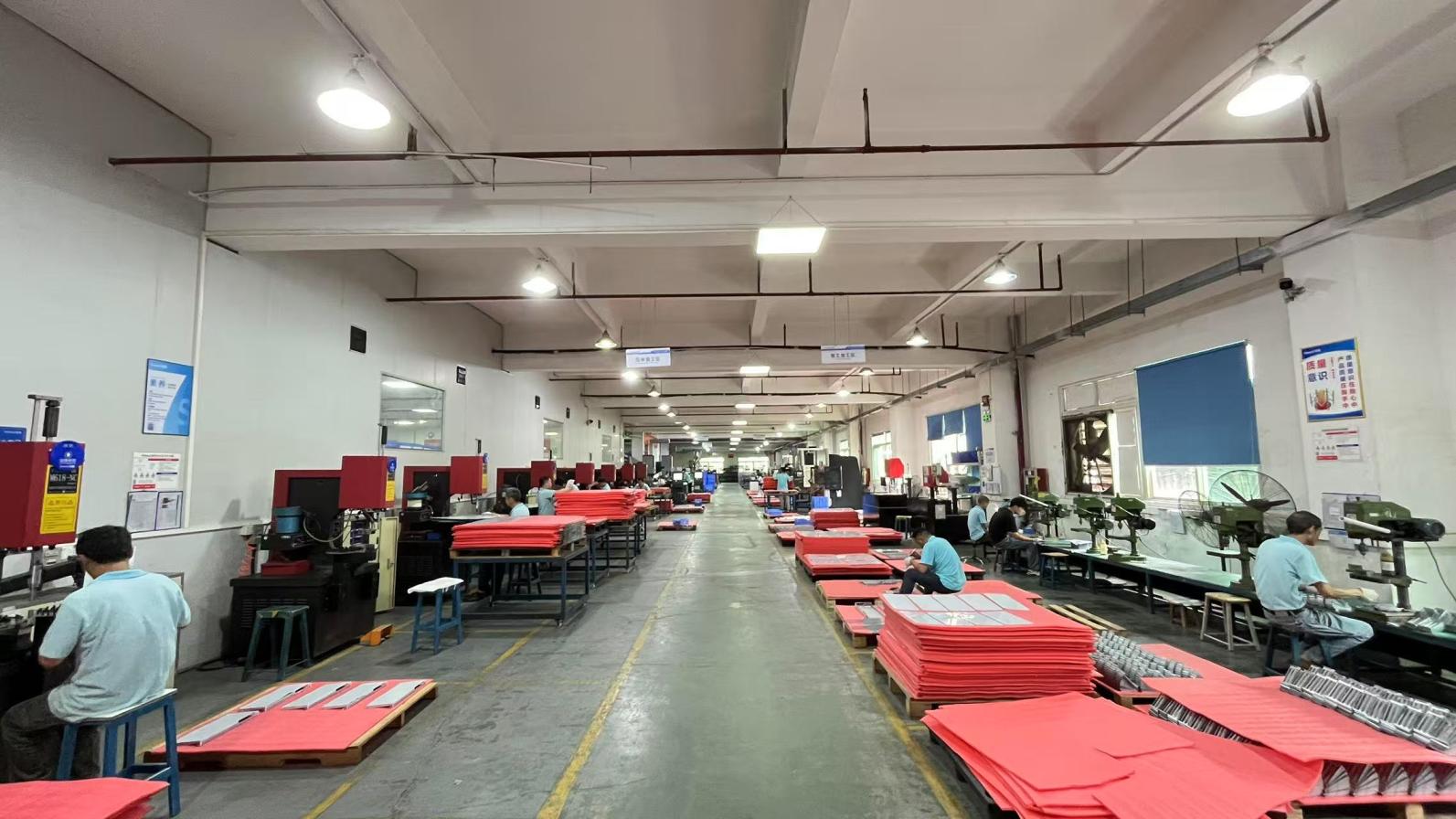
Importing high-specification electronics to Uruguay requires reliable partners who understand international standards, logistics, and regional customs. Sourcing from our modern manufacturing facilities in China provides several advantages:
Quality and reliability are fundamental to our business philosophy. For telecommunication equipment deployed in Uruguay, complying with local URSEC guidelines and international telecom frameworks is essential. Our production procedures are designed to meet these rigorous demands:
By implementing these quality assurance standards, we help reduce troubleshooting costs, minimize field servicing requirements in remote regions of Uruguay, and guarantee a lower Total Cost of Ownership (TCO) for local engineering enterprises.
As networks scale to handle emerging data requirements, physical components are evolving as well. The industry is moving from simple 1Gbps interfaces to multi-gigabit speeds. High-density edge computers and IoT devices now require 2.5G Base-T and 5G Base-T speeds to bridge the gap between legacy wiring and modern fiber connections. This makes multi-gigabit capabilities essential for modern designs.
Furthermore, PoE standards are expanding. With PoE++ (IEEE 802.3bt Type 4), connectors must support up to 90W-100W of DC power over four wire pairs. Sourcing components with high-quality copper contacts (usually finished with 50-microinch gold plating over nickel) is vital. This minimizes contact resistance, mitigates electric arcing during hot-plugging, and maintains stable network connections under continuous loads.
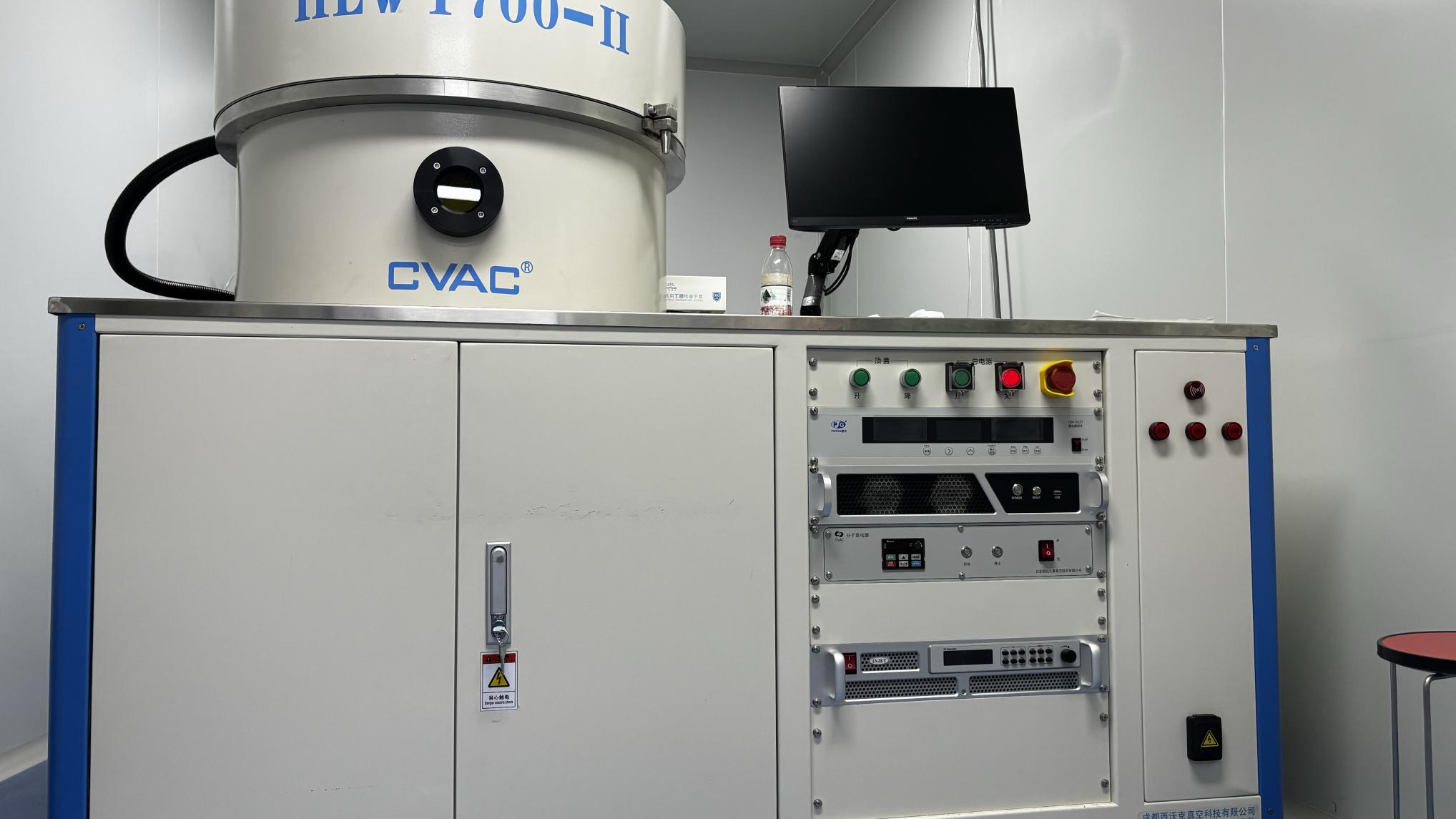
FiberNova Optical Communication Tech Co., Ltd. (FiberNovaTransceivers.com) is an established optical transceiver and high-density copper connector manufacturer founded in 2016. Operating from a modern production facility of approximately 380㎡, we specialize in high-speed optical and copper communication solutions, serving global telecom and enterprise clients with stable, high-performance hardware.
Backed by over 6 years of export experience and 12 years of industry expertise, FiberNova excels in R&D, manufacturing, and global trade operations. We generate an annual export revenue of USD 8–15 million, supplying network systems integrators across North America, Europe, Southeast Asia, the Middle East, and Latin America.
Our quality control program includes 100% optical performance testing, temperature cycling tests, and signal integrity inspection before shipping. Supported by a team of 45 professional QC staff, we ensure that every product meets relevant IEEE, MSA, and regional import standards.
We work with over 1,200 supply chain partners, enabling stable sourcing of semiconductor chips, lasers, and copper interfaces. Our 65-engineer R&D division continuously expands our product portfolio, developing advanced interfaces for 10G, 25G, 100G, 400G, and 800G platforms. Over the past year alone, we launched roughly 120 new products to meet shifting industry demands.

 FiberNova