An LC connector transceiver combines an optical transceiver with an LC-style fiber interface. The small connector has a familiar blue latch in many single-mode applications, while multimode versions are often beige or aqua. Color can help, but it is not a reliable substitute for checking the part number and specification.
Inside the module, electrical signals are converted into optical signals for transmission, then converted back at the receiving end. The LC connector provides the physical connection to the fiber; the transceiver’s wavelength, data rate, reach, and fiber type determine whether the link can work. A connector that clicks neatly into place does not guarantee a compatible link. That detail is easy to miss.
For a dependable installation, check the switch or router’s supported transceiver type, the fiber grade, the required reach, and the optical power budget. Keep connector end faces clean, seat each plug fully, and inspect the link after installation. Small contamination can cause intermittent errors that are difficult to trace.
A verified expert quotation should add practical value here, not just authority. No source or named expert was provided, so I won’t invent an attribution. A suitable quotation should come from a confirmed optical-networking specialist and address compatibility, cleanliness, or link-budget checks. This guide takes a cautious approach: match the specifications first, then test the actual link.
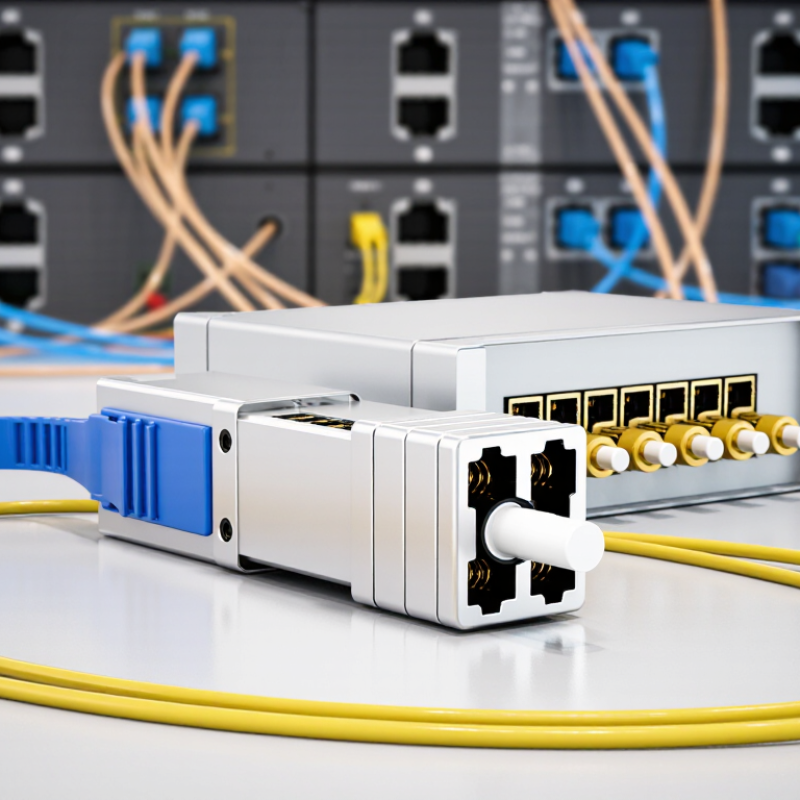
What Is an LC Connector Transceiver?
An LC connector transceiver is an optical module that sends and receives data through fiber using a small LC interface. The module converts a switch’s electrical signal into light, then converts incoming light back into an electrical signal. A duplex LC plug has two 1.25 mm ferrules: one carries transmit light, and the other receives it. Small, but not magic.
LC connectors are common on SFP and SFP+ modules, and on some QSFP variants. Connector shape alone does not identify a module’s speed or reach. Match its wavelength, fiber type, link budget, and host-device support. For example, 850 nm multimode optics and 1310 nm single-mode optics require different fiber paths. The Ethernet Alliance’s 2024 Ethernet Roadmap lists 400GbE, 800GbE, and 1.6TbE generations. Those figures show why speed and optics must be checked together. Before insertion, inspect and clean the endface with fiber-grade tools; dust can increase signal loss or cause intermittent links. In practice, this detail is easy to miss. An LC transceiver is not simply “an LC port”: its optics, fiber, and platform must align. Tiny errors matter.
Key Components of an LC Connector Transceiver
What Is an LC Connector Transceiver?
Key Components of an LC Connector Transceiver
An LC connector transceiver converts electrical signals into optical signals and back again. “LC” refers to its compact fiber connector, not a specific data rate. Inside, a laser diode or VCSEL sends light through the fiber. A photodiode detects incoming light and turns it into an electrical signal. In a duplex LC setup, two fibers commonly carry transmit and receive traffic separately. Some designs use a single fiber instead.
Several parts work together. The optical subassemblies hold the transmitter and receiver components in position, while a circuit board processes signals and manages power. Depending on the model, it may also include digital monitoring circuits. The electrical edge connector links the module to network equipment. A metal housing protects the components, and a small latch helps secure the module in its port. These details matter. A clean, properly seated LC connection helps limit signal loss, though it cannot correct every fiber or equipment issue. The connector face is easy to overlook; even a tiny dust spot can interfere with light. Transceiver designs vary, so checking the specifications is more reliable than assuming every LC module works the same way.
What Is an LC Connector Transceiver? — Key Components
An LC connector transceiver converts electrical signals to optical signals and back. Its key components include an LC connector interface, an optical transmitter (such as a VCSEL or laser), a photodiode receiver, and supporting driver and amplifier circuitry. The chart shows typical nominal wavelengths used by common multimode and single-mode link types.
How an LC Connector Transceiver Transmits Data
An LC connector transceiver turns electrical signals from a switch or server into pulses of light, then converts incoming light back into electrical signals. The transceiver performs the conversion; the LC connector provides the precise fiber connection. Inside the module, a laser or LED sends modulated light, while a photodiode detects light arriving from the opposite end.
In a common duplex setup, two slim LC plugs connect separate transmit and receive fibers. One carries outgoing data. The other carries incoming data. Tiny alignment matters: dust or a poorly seated connector can weaken the optical signal and cause errors. For example, 10GBASE-LR optics use light near 1,310 nanometers and support links up to 10 kilometers over single-mode fiber under specified conditions, as defined in IEEE 802.3. Actual reach depends on the complete link, not the connector alone.
The scale behind these links is growing. The ITU’s Facts and Figures 2023 estimated that 5.4 billion people, or 67% of the world’s population, were online. That figure does not measure fiber traffic directly, but it helps explain demand for reliable network capacity. Two fibers. One link. In practice, the details matter: technicians should match the transceiver to the fiber type, clean connector end faces, and check optical power. It is easy to assume an LC fit means a working link. It doesn’t always.
Important Specifications and Compatibility Factors
An LC connector transceiver converts electrical signals into light and connects to fiber through a small, push-pull LC interface. LC describes the connector, not the transmission distance or data rate. Compatibility depends on the module’s form factor, host port, wavelength, fiber type, and link budget. IEEE 802.3-2022 specifies 10GBASE-LR for links up to 10 km over single-mode fiber, while 10GBASE-SR supports up to 400 m over OM4 multimode fiber. These figures are useful reference points, not guarantees for every installed link.
Check whether the equipment accepts the module’s form factor and line rate. Then match the optical wavelength and fiber: single-mode and multimode optics are not interchangeable. A duplex LC patch cord uses two fibers; BiDi optics typically use one, so verify the port arrangement. Small details matter. IEC 61754-20 defines the LC connector interface, but matching connectors alone does not ensure system compatibility. IEEE reach specifications assume suitable fiber and channel conditions. Dirty end faces, tight bends, or added splices can reduce optical margin. I still check the host compatibility list and measure the installed link before deployment. A label can look right and still hide a mismatch.
Common Applications of LC Connector Transceivers
What Is an LC Connector Transceiver?
Common Applications of LC Connector Transceivers
LC connector transceivers are widely used where compact fiber connections and dependable data links are needed. Their small connectors fit neatly into crowded switch panels and server racks. In data centers, they link servers, switches, and storage systems, carrying traffic between equipment across short or moderate distances. A technician tracing a patch cord through a packed rack will appreciate the space savings. Small details matter.
Enterprise networks use LC transceivers to connect equipment across office floors or between building wiring closets. They can support high-speed links without the electrical interference that may affect copper cabling. Telecom access networks also use them in aggregation equipment, where multiple customer connections feed into larger systems. Some deployments rely on single-mode fiber for longer runs; others use multimode fiber inside buildings. The right choice depends on distance, data rate, fiber type, and compatible equipment—not just the connector shape.
Cleaning is easy to overlook, yet dust on a fiber end face can disrupt a link. Not always obvious. Checking the link budget and inspecting connections before installation can prevent avoidable troubleshooting later.
LC transceivers are common, but they are not automatically interchangeable across every network.
Conclusion
An LC connector transceiver is a compact optical module that converts electrical signals into light and back again, while using a small LC-style connector to link fiber-optic cables with networking equipment. Its main components typically include a transmitter, a receiver, signal-processing circuitry, and an optical interface. Together, these parts enable data to travel across fiber and be interpreted at the receiving end.
When choosing an LC connector transceiver, consider its data rate, wavelength, transmission distance, fiber type, and compatibility with the host device. The connector and optical specifications must also match the installed cabling and link requirements. These transceivers are commonly used in switches, routers, servers, and other systems that need reliable, space-efficient fiber connections, including data-center and enterprise networks. Understanding their operation and specifications helps ensure a suitable fit for a particular application.

 FiberNova