Choosing the best CWDM transceiver from China requires more than comparing prices on a supplier webpage. A reliable choice must match your fiber type, wavelength plan, transmission distance, port speed, and network equipment. It should also perform steadily in real installation conditions, including crowded racks, changing temperatures, and long operating hours.
Fiber-optics pioneer Dr. Charles K. Kao once said, “Optical fiber is the backbone of the information society.” His words remain relevant today. A CWDM transceiver extends that backbone by carrying multiple wavelengths through one fiber pair. However, the best product is not always the cheapest module. That conclusion is too simple.
Experienced buyers usually examine optical power, receiver sensitivity, insertion loss, DOM support, connector quality, and coding compatibility. They also request test reports, production records, and a clear warranty policy. A serious Chinese manufacturer should explain these details without hiding behind broad performance claims. Ask for sample testing. Check interoperability with Cisco, Juniper, Huawei, ZTE, or your actual platform. Small coding problems can interrupt an otherwise healthy link.
The supplier’s process matters too. Look for controlled assembly, calibrated testing equipment, traceable components, and responsive technical support. Compliance documentation should be available for the target market. Yet even strong documentation cannot replace field verification. I have seen specifications look excellent on paper while installation results remain disappointing. That is the uncomfortable part.
This guide compares Chinese CWDM transceiver suppliers through performance, compatibility, quality control, delivery capability, and after-sales support. The goal is practical selection, not exaggerated praise. The best answer depends on your network. Test before scaling.
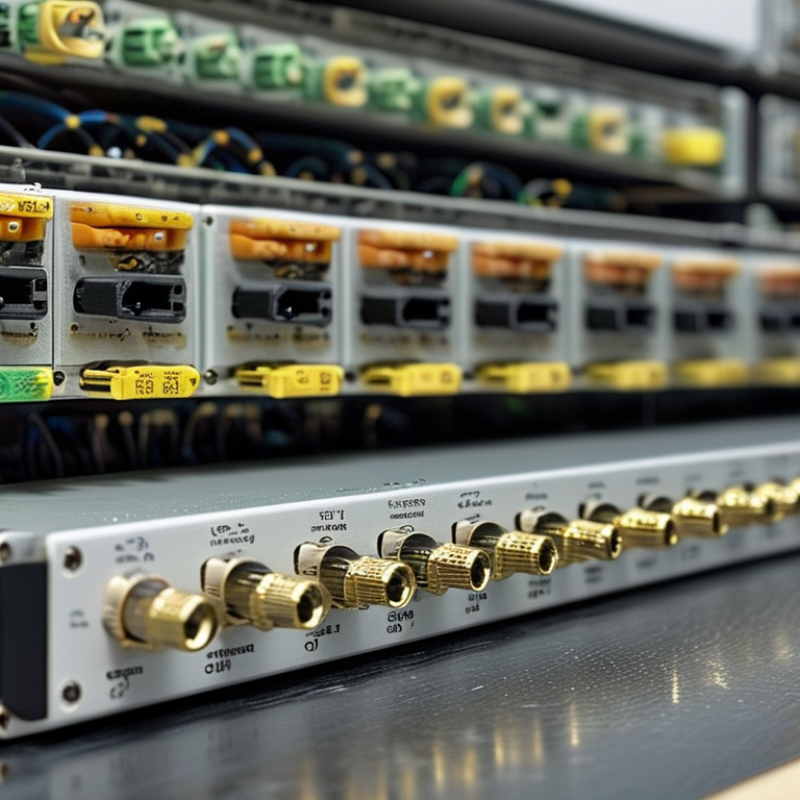
A CWDM transceiver combines a transmitter and receiver in one optical module. It sends data through different wavelength channels on a single fiber pair. The transmitter converts electrical signals into light, while the receiver changes incoming light back into data.
CWDM follows the ITU-T G.694.2 wavelength grid, using 20 nm spacing. A full grid can support up to 18 channels, commonly ranging from 1271 nm to 1611 nm. Inside a metro cabinet, a multiplexer combines these colored signals. At the far end, a demultiplexer separates them. Simple in theory.
Cisco’s Annual Internet Report forecast global IP traffic at 396 exabytes per month by 2022. This growth explains why operators reuse existing fiber instead of installing new cables. In practical deployments, four or eight channels are often preferred. They balance capacity, optical loss, and budget. A 10G CWDM module may reach 40 or 80 kilometers, depending on fiber quality and link conditions. These numbers require careful testing.
A reliable Chinese-made transceiver should match wavelength, transmission distance, connector type, temperature range, and monitoring functions. Digital diagnostics can reveal temperature, voltage, and received power. I would not judge quality by price alone. Some low-cost modules pass factory tests but perform poorly in mixed networks. Compatibility is also imperfect. Checking coding, optical power, and receiver sensitivity before installation prevents expensive surprises.
| Selection Dimension | Typical CWDM Specification | How It Works or What It Means | Recommended Choice Criteria |
|---|---|---|---|
| Optical Technology | Coarse Wavelength Division Multiplexing (CWDM) | Multiple optical signals travel through one single-mode fiber at different wavelengths, allowing several channels to share the same fiber pair. | Choose CWDM when fiber capacity needs to be expanded without installing additional fiber cables. |
| Wavelength Spacing | 20 nm channel spacing | The wide spacing between channels reduces wavelength-management complexity and helps limit adjacent-channel interference. | Select a transceiver whose wavelength matches the corresponding port on the CWDM multiplexer or demultiplexer. |
| Common Wavelength Range | Approximately 1270 nm to 1610 nm | CWDM channels are assigned to an ITU-T grid with nominal 20 nm spacing. Actual operating specifications may use channel center wavelengths such as 1271 nm, 1291 nm, or 1311 nm. | Confirm whether the equipment uses nominal wavelengths or the actual center-wavelength designation before ordering. |
| Maximum Grid Capacity | Up to 18 channels on the full CWDM grid | The theoretical channel count is based on the 20 nm grid across the available wavelength range. Practical deployments may use fewer channels because of fiber loss, connector loss, and equipment limitations. | For a new installation, reserve unused wavelengths for future expansion and maintenance flexibility. |
| Typical Data Rates | 1.25 Gb/s, 2.5 Gb/s, 4.25 Gb/s, 10 Gb/s, and selected higher-rate applications | The transceiver converts electrical data into an optical signal and converts the received optical signal back into electrical data. | Match the optical module to the exact switch, router, storage, or transport-system data rate. |
| Typical Form Factors | SFP, SFP+, XFP, and selected QSFP-based solutions | The form factor determines the host-device slot, electrical interface, mechanical dimensions, and supported data rate. | Prioritize host-device compatibility, electrical coding, and the required port speed over physical size alone. |
| Fiber Type | Single-mode fiber, commonly OS2 | CWDM uses low-loss single-mode fiber to carry multiple wavelength channels over metropolitan, campus, and access networks. | Verify the installed fiber type, link loss, splice loss, and connector condition before selecting optical power levels. |
| Typical Reach Options | Approximately 10 km, 20 km, 40 km, 80 km, and longer specialized links | Reach depends on transmit power, receiver sensitivity, fiber attenuation, connector and splice loss, and the loss introduced by passive CWDM components. | Choose by calculating the complete optical power budget rather than selecting reach from distance alone. |
| Optical Power Budget | Common commercial modules: about 5 dB to 24 dB, depending on rate and reach | The power budget is the difference between the minimum transmitter output and the receiver sensitivity. It must exceed total link attenuation with an engineering margin. | Use a positive design margin, typically allowing additional loss for aging, repairs, connectors, and temperature variation. |
| Wavelength Management | One fixed wavelength per transceiver | A CWDM transceiver normally transmits and receives on a designated wavelength pair or channel arrangement defined by the network architecture. | Keep a wavelength map for every channel and ensure the transceiver, multiplexer, demultiplexer, and remote unit use matching assignments. |
| Duplex Configuration | Usually dual-fiber duplex; some designs use bidirectional single-fiber operation | In a duplex arrangement, one fiber carries the transmit direction and the other carries the receive direction. Single-fiber designs use separated wavelengths for the two directions. | Confirm whether the network uses two fibers or one fiber before choosing the optical interface. |
| Optical Connector | LC duplex is common; other connector types may be available | The connector provides the physical interface between the transceiver and the fiber patch cord. Insertion loss and cleanliness directly affect link performance. | Match the connector type and polishing style, and inspect or clean connectors before commissioning. |
| Operating Temperature | Commercial: approximately 0°C to 70°C; industrial: approximately -40°C to 85°C | Temperature range indicates the environment in which the module is designed to maintain its specified optical and electrical performance. | Use industrial-temperature equipment for outdoor cabinets, roadside enclosures, and other uncontrolled environments. |
| Digital Diagnostics | Often supports monitoring of temperature, voltage, bias current, transmit power, and receive power | Digital monitoring helps identify degraded optical power, overheating, abnormal bias current, and potential fiber faults. | Prefer modules with diagnostics when the network requires proactive maintenance or centralized monitoring. |
| Power Consumption | Typically below 2 W for many SFP and SFP+ modules; higher-speed or specialized modules may consume more | Electrical power is converted into optical output and consumed by the laser driver, receiver, monitoring circuits, and module controller. | Check the host switch or router power limits, especially in high-density deployments. |
| CWDM Mux/Demux Compatibility | Must match channel wavelength, fiber direction, connector type, and loss specification | The multiplexer combines separate wavelengths onto one fiber, while the demultiplexer separates them at the receiving end. | Confirm channel-center wavelength and insertion-loss data for the complete passive optical path. |
| Best-Fit Application | Campus networks, metropolitan links, access networks, data-center interconnection, and fiber-deployment expansion | CWDM increases the capacity of existing single-mode fiber while generally requiring less cooling and power than active wavelength-division systems. | Choose CWDM for moderate channel counts and cost-sensitive links where the available distance and capacity fit the optical budget. |
| Main Limitation | Fewer channels and less spectral efficiency than DWDM | The 20 nm spacing provides simplicity but uses more spectrum per channel and limits total channel density compared with narrower-spacing systems. | Consider DWDM instead when the network requires many channels, very high capacity, or long-haul transmission with tight spectral planning. |
| Practical Buying Checklist | Data rate, wavelength, reach, power budget, connector, fiber type, temperature range, diagnostics, and host compatibility | These parameters determine whether the transceiver will operate correctly with the installed active and passive optical equipment. | The best CWDM transceiver is the one that satisfies the complete link budget and compatibility requirements, not simply the one with the longest advertised reach. |
: It combines a transmitter and receiver in one optical module. It sends several wavelength channels through one fiber pair.
The transmitter changes electrical data into light. A multiplexer combines colored signals inside a network cabinet. A demultiplexer separates them at the receiving end. Simple in theory.
The standard grid uses 20 nm spacing. A complete grid can support up to 18 channels, from 1271 nm to 1611 nm. Many networks use four or eight channels instead.
A 10G module may support 40 or 80 kilometers. Actual distance depends on fiber quality, connectors, and link loss. These figures require testing.
CWDM increases capacity on existing fiber pairs. It can avoid immediate cable construction. Four or eight channels often balance capacity, optical loss, and budget.
Match the wavelength, distance, connector, temperature range, and monitoring functions. Check coding, optical power, and receiver sensitivity first. Small mismatches can cause expensive installation problems.
Quality varies between suppliers and production batches. Look for stable wavelength output, clear test records, and useful digital diagnostics. Price alone is not enough. That assumption can fail.
Include warranty coverage, replacement speed, compatibility testing, and technical support. A low unit price may create extra installation labor. A high price does not guarantee better performance.
Test samples in the intended switches first. Check temperature behavior, optical power, coding, and error performance. Independent reports can help, but paperwork is not proof of long-term reliability. Test again.
A CWDM transceiver is an optical communication module that combines wavelength division multiplexing with fiber transmission, allowing multiple independent data channels to travel through a single fiber pair. Each channel uses a different wavelength, helping organizations expand network capacity without installing additional fiber. When evaluating a CWDM transceiver, buyers should consider transmission distance, supported data rates, wavelength accuracy, optical power, receiver sensitivity, temperature range, power consumption, connector type, and compatibility with existing network equipment.
Chinese CWDM transceivers are increasingly considered for data centers, telecommunications networks, enterprise backbones, security systems, and metropolitan networks because they can offer flexible specifications and competitive costs. However, quality and reliability may vary between suppliers. Selecting a dependable supplier requires checking product testing procedures, component quality, customization capabilities, technical support, delivery consistency, warranty terms, and compliance with relevant industry requirements. A careful comparison of performance, lifecycle value, and supplier service can help buyers choose a suitable CWDM transceiver for both current capacity needs and future network expansion.

 FiberNova