Choosing the best 25G SFP28 transceiver in 2026 is not simply a matter of selecting the highest advertised speed. A reliable choice must match the switch, network card, fiber type, distance, FEC settings, and operating temperature. IEEE 802.3by defines 25GbE requirements, while SFF-8402 and related MSA specifications guide mechanical and electrical compatibility. These standards matter at the rack level. A module can show 25Gbps on its label yet fail to establish a stable link with an older vendor platform.
Market demand also provides useful context. Dell’Oro Group’s Ethernet Switch Five-Year Forecast continues to identify data-center bandwidth growth as a major market driver. LightCounting’s optical transceiver research similarly links AI infrastructure expansion with stronger demand for higher-speed optical connectivity. However, 25G remains practical for server access, storage networks, and cost-sensitive upgrades. It often offers a sensible step beyond 10G without forcing a complete 100G migration.
The best module is application-specific.
This guide compares 25G SFP28 transceiver options through real deployment factors, including SR, LR, ER, DAC, and AOC designs. It will examine optical reach, DOM monitoring, coding, power consumption, interoperability, warranty support, and vendor testing evidence. A laboratory result does not guarantee every production link. Dust, mixed firmware, and poor patch-panel maintenance can still create errors. That limitation deserves attention. Readers should verify switch compatibility and optical budgets before purchasing, rather than trusting a universal compatibility claim. The strongest recommendation is therefore not one product for everyone, but the most transparent and validated option for a defined network environment.
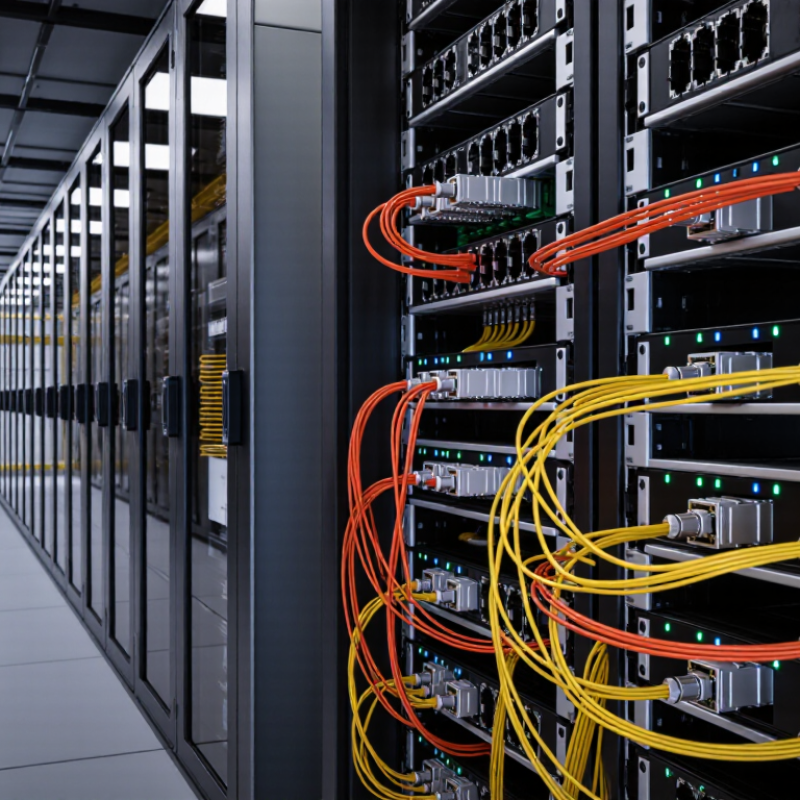
What Is a 25G SFP28 Transceiver?
What is the best 25G SFP28 transceiver in 2026? The answer begins with understanding the module itself. A 25G SFP28 transceiver is a compact, hot-swappable device for transmitting and receiving 25GbE data. It connects switches with servers, storage systems, or other network devices. The number “25G” describes its nominal network speed. “SFP28” refers to its small form factor and electrical interface. It is slightly different from a 10G SFP+ module. Small size matters.
Inside the transceiver, a laser or electrical driver sends data through the medium. A receiver converts incoming signals back into electrical data. Optical versions usually use duplex fiber and specific wavelengths. Short-reach modules may use multimode fiber, while longer links often require single-mode fiber. Direct-attach copper cables can suit short connections inside one rack. Host equipment must support the required speed and module type. A 25G module cannot make every 10G port operate at 25G. That assumption causes avoidable troubleshooting.
Reliable selection requires more than comparing speed. Check the port mode, fiber type, connector, transmission distance, temperature range, and IEEE 802.3by compatibility. Digital diagnostics may report temperature, voltage, and optical power through SFF-8472 functions. Field experience shows that dirty connectors can resemble a defective module. Cleaning helps, but it is not a complete diagnosis. The word “best” remains imperfect because traffic patterns and hardware vary. A module may pass bench testing yet fail after installation because of weak fiber loss margins. Verify the link with actual equipment before wide deployment.
How 25G SFP28 Transceivers Work
A 25G SFP28 transceiver connects a network switch to a server or another switch through fiber. The switch sends electrical data through its SerDes interface. Inside the module, a laser converts those signals into timed light pulses. A photodiode performs the reverse operation at the receiving end. The process happens billions of times per second.
The common 25G Ethernet lane operates near 25.78125 gigabaud and usually uses NRZ signaling. The module also manages clock recovery, signal conditioning, and diagnostic monitoring. During installation, I check the fiber type, connector cleanliness, link distance, and transmission wavelength. A single dust particle can create unexpected loss. Small details matter.
The best 25G SFP28 transceiver in 2026 is not simply the fastest model. It should match the switch coding, fiber plant, temperature range, and required reach. Digital monitoring can report temperature, voltage, bias current, and optical power. These readings help locate weak links before a complete failure. I once assumed a low receive-power alarm meant a defective module. It was actually a poorly seated connector. That reminder still matters. Compatibility tables are useful, but real testing remains necessary. Some links pass immediately; others need firmware checks, cleaner connectors, or adjusted power budgets. A reliable choice offers stable optical performance, accurate diagnostics, and predictable interoperability across the intended network.
What Is the Best 25G SFP28 Transceiver in 2026?
The best 25G SFP28 transceiver depends on link distance and cabling. Short-reach multimode optics are suitable for data-center connections, while single-mode optics provide much longer links.
How 25G SFP28 transceivers work: The host equipment sends 25.78125 Gb/s electrical data to the SFP28 module. The transmitter converts the electrical signal into light, which travels through copper or fiber. At the receiving end, a photodetector converts the optical signal back into electrical data. Typical maximum distances range from a few meters with direct-attach copper to about 10 km with single-mode long-reach optics.
Typical maximum distances shown: passive DAC up to 3 m, active optical cable up to 30 m, multimode SR up to 100 m over OM4, and single-mode LR up to 10 km. Actual performance depends on the transceiver specification, fiber grade, connectors, and link budget.
Key Specifications for Comparing 25G SFP28 Transceivers
What Is the Best 25G SFP28 Transceiver in 2026?
Choosing a 25G SFP28 transceiver starts with the link, not the product label. Check whether the switch supports 25GBASE-SR, LR, or another approved standard. A typical 25G link uses a 25.78125 Gb/s line rate. Your fiber type matters. Multimode fiber suits short data-center runs, while single-mode fiber supports longer distances. Confirm the wavelength, rated reach, and connector type before ordering.
Optical performance deserves close attention. Compare transmit power, receiver sensitivity, extinction ratio, and maximum power consumption. A low receiver sensitivity can reduce margin across long patch panels or aging cables. I also inspect bit error rate limits and forward error correction requirements. Digital optical monitoring is valuable because it reports temperature, voltage, bias current, and optical levels during operation. That evidence is more useful than a polished datasheet alone.
Compatibility can be less obvious. Verify host coding, firmware expectations, cage temperature, and operating temperature range. Some ports accept only specific module categories or require configuration changes. I have seen a transceiver pass a bench test but fail after several hours under heat. That experience changed my testing routine. I now measure errors, temperature, and link stability for at least a full workload cycle. Check the fine print. Independent test records, traceable specifications, and a clear warranty process also indicate stronger reliability.
Best 25G SFP28 Transceiver Types for Different Networks
The best 25G SFP28 transceiver depends on distance, fiber type, and network conditions. There is no universal winner.
For short server-to-switch links, a passive DAC is usually the simplest choice. It reduces power use and keeps latency low, but cable length is limited. An AOC suits slightly longer connections and crowded racks. Its fixed optical ends can simplify installation, though replacement is less flexible. For multimode fiber, 25G SR commonly supports links up to about 70 meters with OM3 and 100 meters with OM4. It fits data halls with closely placed racks.
Single-mode networks need different options. A 25G LR module can typically reach 10 kilometers, making it practical for campus buildings and metro access rooms. BiDi modules can save fiber by sending signals in both directions over one strand. However, their wavelengths must match at each end. Extended-reach options may cover longer paths, but optical loss and dispersion require careful testing. Real deployments often expose problems that datasheets hide.
Tips: Check the switch’s supported coding, FEC mode, temperature range, and optical budget. Inspect DOM readings after installation. A link that works today may still have weak margins. Leave room for dirty connectors, future patching, and unexpected fiber loss. When mixing transceiver types, confirm wavelength pairing and interoperability before purchasing in volume.
How to Choose the Best 25G SFP28 Transceiver in 2026
What Is the Best 25G SFP28 Transceiver in 2026?
Choosing the best 25G SFP28 transceiver starts with your network design, not the lowest price. Confirm the switch port supports 25.78125 Gb/s Ethernet and the required SFP28 specification. For short data-center links, SR optics with OM3 or OM4 multimode fiber can suit distances up to 70 or 100 meters. LR optics usually support longer single-mode fiber connections, often up to 10 kilometers. Check the actual distance, connector type, and fiber grade before ordering.
Compatibility deserves careful testing. Review the host device’s supported wavelength, coding, FEC behavior, and operating temperature. Digital monitoring can report temperature, voltage, bias current, and optical power. These readings help identify a weak connection before packet loss becomes visible. In field installations, I also compare transmit and receive power after cleaning both connectors. Small contamination can create large problems. I still treat datasheets as a starting point, not proof.
Tips: Match SR with multimode fiber and LR with single-mode fiber. Verify the module’s EEPROM information with your switch. Test traffic under load, not only during link-up. Keep spare units from the same specification. A transceiver may pass a basic link test yet fail during heat buildup or sustained traffic. Document every result, including cable length, temperature, and error counters. That record makes future troubleshooting faster and more reliable.
Conclusion
A 25G SFP28 transceiver is a compact, hot-swappable optical or copper module designed to deliver 25Gbps connectivity for modern data centers, enterprise networks, and high-performance server links. It converts electrical signals from network equipment into optical or electrical signals for transmission through fiber or copper cabling. Compared with lower-speed modules, it provides greater bandwidth and improved port efficiency while maintaining the widely used SFP form factor.
Choosing the best 25G SFP28 transceiver in 2026 requires comparing transmission distance, wavelength, fiber type, connector design, operating temperature, power consumption, latency, and equipment compatibility. Short-range multimode options suit connections within a facility, while single-mode modules are better for longer distances. Direct-attach copper cables can offer a cost-effective choice for short server-to-switch links. The ideal solution should match network architecture, cable infrastructure, performance requirements, and future expansion plans, while also providing stable operation and reliable interoperability.

 FiberNova