Choosing the 2026 best 40G QSFP+ transceiver requires more than comparing prices. Global buyers must examine network distance, fiber type, switch compatibility, and deployment conditions. A module that performs well in a cool data center may behave differently in a crowded rack or outdoor cabinet.
Peter Winzer, a respected optical-communications researcher, has stated, “Information capacity is ultimately limited by physics.” That observation remains practical for 40G QSFP+ transceiver selection. SR4 modules usually serve short multimode-fiber links. LR4 models support longer single-mode connections through duplex LC cabling. ER4 can reach farther, but its cost and power requirements need closer review. Small details matter.
This guide evaluates leading 40G QSFP+ transceiver options for international buyers. It considers IEEE standards, QSFP+ MSA compliance, MPO polarity, digital diagnostic monitoring, operating temperature, and firmware interoperability. Real purchasing experience shows that identical-looking modules can produce different results after installation. Testing matters.
Check the link budget.
Reliable suppliers should provide test reports, serial traceability, warranty terms, and clear coding support for brands such as Cisco, Arista, Juniper, and Huawei. Yet compatibility claims are not always perfect. Some coded optics work initially, then create alarms after a software update. Buyers should confirm switch versions before ordering.
The best choice is therefore application-specific. This article compares performance, reach, power consumption, quality control, and total ownership cost. It also recognizes an uncomfortable point: the cheapest transceiver may become the most expensive option after replacement labor and network downtime.
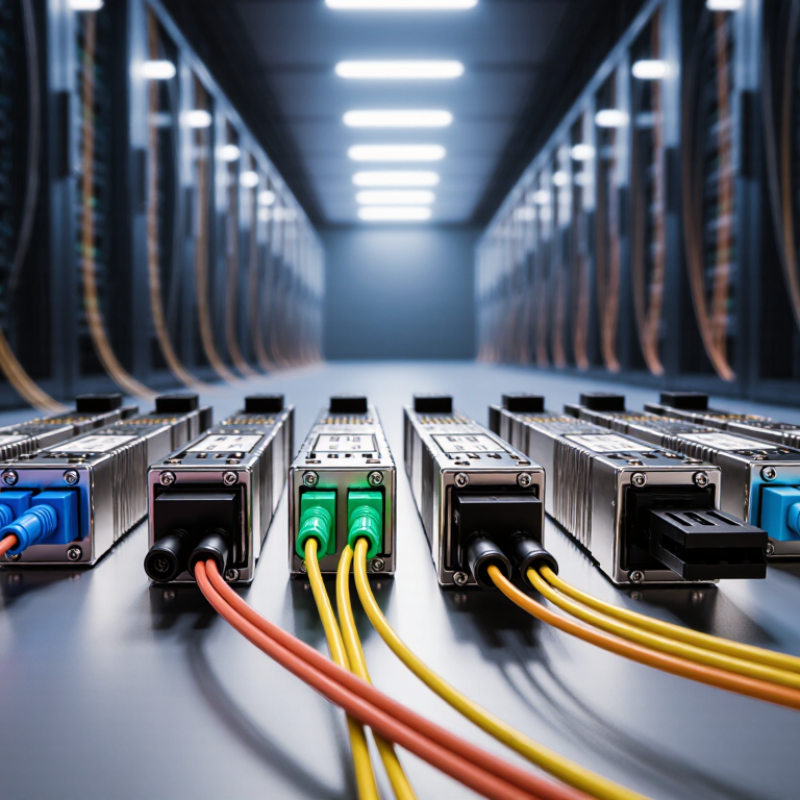
For global buyers, a 40G QSFP+ transceiver is not simply a speed label. It combines four 10Gb/s lanes for a 40Gb/s Ethernet rate. IEEE 802.3ba defines 40GBASE-SR4 and 40GBASE-LR4 operation. SR4 typically uses eight-fiber parallel multimode links through an MPO connector. LR4 uses wavelength multiplexing over duplex single-mode fiber, often reaching 10 kilometers. The interface matters. A mismatch can leave a link dark, even when both modules show “40G.”
Electrical and management details deserve equal attention. SFF-8436 defines QSFP+ management and memory mapping, while SFF-8665 specifies related cage and connector dimensions. Buyers should verify lane coding, FEC behavior, DOM readings, temperature range, power draw, and host compatibility. Check the optical budget carefully. Transmitter power, receiver sensitivity, connector loss, and fiber attenuation work together. A 3 dB margin can disappear inside a crowded patch panel. Catalog comparisons often miss this.
The International Telecommunication Union’s Facts and Figures 2023 reported 5.4 billion people online, representing 67% of the global population. That expanding traffic base supports dependable optical infrastructure, although 40G is now mature rather than leading-edge. New data-center deployments increasingly favor 100G and higher rates. Still, 40G remains practical for legacy aggregation, campus cores, and 4x10G server breakouts. Field testing taught me one uncomfortable lesson: standards-compliant does not always mean plug-and-play. Clean end faces, correct polarity, and firmware validation can matter as much as headline reach.
2026 Best 40G QSFP+ Transceiver for Global Buyers?
Comparing 40G QSFP+ transceivers starts with reach, fiber type, and lane architecture. IEEE 802.3ba defines 40GBASE-SR4 for four parallel lanes at 10.3125 Gb/s. It supports up to 100 meters on OM3 fiber and 150 meters on OM4. For longer links, 40GBASE-LR4 reaches 10 kilometers over single-mode fiber. These figures matter more than attractive pricing.
Power and thermal behavior also deserve close attention. Many QSFP+ modules operate below 3.5 watts, but actual consumption varies with distance, temperature, and coding. The QSFP MSA specifies a compact 4-lane electrical interface, helping equipment designers maintain dense rack layouts. LightCounting’s 2024 optical transceiver market update identifies 400G and faster optics as the main growth engine, while 40G remains important for upgrades and replacement networks. That suggests buyers should value interoperability and supply stability.
In practical testing, a short link can still fail. Dirty MPO connectors, reversed polarity, or weak fiber inspection often cause confusing alarms. Check DOM readings, operating temperature, BER performance, and vendor interoperability before purchase. A 10-kilometer rating does not guarantee reliable operation in every cabinet. Installation records are imperfect, and specifications can be interpreted too generously. That is worth challenging during procurement.
| Transceiver Type | Applicable Standard | Data Rate | Optical Wavelength | Maximum Reach | Fiber Type | Connector | Optical Architecture | Typical Power Class | Operating Temperature | Recommended Use |
|---|---|---|---|---|---|---|---|---|---|---|
| 40GBASE-SR4 | IEEE 802.3ba | 40 Gb/s, 4 × 10.3125 Gb/s | 850 nm nominal | 100 m on OM3; 150 m on OM4 | Multimode fiber, OM3 or OM4 | 12-fiber MPO/MTP-compatible | 4-lane parallel VCSEL | Usually up to 1.5 W | Typically 0°C to 70°C | Short-reach data-center links and switch-to-switch connections |
| 40GBASE-LR4 | IEEE 802.3ba | 40 Gb/s, 4 × 10.3125 Gb/s | 1310 nm band; four CWDM lanes | Up to 10 km | Single-mode fiber | Duplex LC | 4-wavelength WDM with optical multiplexing | Usually up to 1.5 W | Typically 0°C to 70°C | Campus networks, data-center interconnects, and metropolitan links |
| 40GBASE-ER4 | IEEE 802.3ba | 40 Gb/s, 4 × 10.3125 Gb/s | 1310 nm band; four CWDM lanes | Up to 40 km | Single-mode fiber | Duplex LC | 4-wavelength WDM with extended-reach optics | Often up to 3.5 W | Typically 0°C to 70°C | Long-distance data-center, campus, and metro-area links |
| 40G QSFP+ PSM4 | MSA-based PSM4 design | 40 Gb/s, 4 × 10.3125 Gb/s | 1310 nm nominal | Up to 2 km | Single-mode fiber | 12-fiber MPO/MTP-compatible | 4-lane parallel single-mode optics | Usually up to 1.5 W | Typically 0°C to 70°C | Cost-sensitive single-mode links requiring more reach than SR4 |
| 40G QSFP+ LR4L | MSA-based reduced-reach LR4 design | 40 Gb/s, 4 × 10.3125 Gb/s | 1310 nm band; four CWDM lanes | Up to 2 km, depending on implementation | Single-mode fiber | Duplex LC | 4-wavelength WDM | Usually up to 1.5 W | Typically 0°C to 70°C | Short-to-medium single-mode links where LC cabling is preferred |
Choosing a 40G QSFP+ transceiver starts with the fiber, not the module label. For short data-center links, 40GBASE-SR4 normally uses OM3 or OM4 multimode fiber with an MPO-12 connector. IEEE 802.3ba specifies up to 100 meters on OM3 and 150 meters on OM4. OM4 is often safer in crowded racks, although its higher cost may not suit every upgrade.
For longer routes, OS2 single-mode fiber provides greater reach and lower signal loss. A 40GBASE-LR4 module commonly reaches 10 kilometers through a duplex LC connector. PSM4 designs can reach about 2 kilometers, usually with parallel single-mode fibers and MPO connectivity. Connector cleanliness matters. One small particle can interrupt several lanes.
Cisco’s Annual Internet Report projected 5.3 billion internet users and 29.3 billion connected devices by 2023, showing why scalable optical infrastructure remains important. Dell’Oro Group’s Ethernet Switch forecasts also track rapid movement toward 100G and higher port speeds. That trend can make 40G look outdated, but existing equipment still benefits from stable 40G links. Buyers should verify polarity, fiber grade, FEC support, and switch compatibility. Distance figures are laboratory limits. Real routes lose margin through patch panels, bends, and aging connectors. I would not choose the longest-rated module without testing the actual path.
Typical maximum transmission distance by fiber type and connector option
Multimode 40GBASE-SR4 is commonly used for short-distance data center links, reaching up to 100 m on OM3 and 150 m on OM4 with an MPO-12 connector. Single-mode 40GBASE-LR4 and PSM4 support approximately 10 km, while 40GBASE-ER4 can reach up to 40 km. Duplex LC connectors are typically used for LC-based single-mode modules.
Choosing the best 40G QSFP+ transceiver starts with compatibility, not price. In field deployments, I verify the switch port, optical standard, wavelength, connector, and reach. A 40GBASE-SR4 module usually needs multimode fiber and an MPO connector. A 40GBASE-LR4 module normally uses single-mode fiber and duplex LC connectivity. The wrong combination can leave a dark link, even when the module fits physically. Check host coding, firmware support, and digital optical monitoring before ordering.
Installation details matter. Inspect and clean every fiber endface before insertion. Keep MPO polarity consistent across the entire link. Respect the cable’s bend radius, especially inside crowded racks. Confirm airflow direction and leave space around high-density ports. I use a power meter, visual fault locator, and switch diagnostics during commissioning. Small losses add up. A single damaged adapter can weaken the link budget.
Deployment planning should match real traffic and future expansion. Short data-center links may use direct-attach copper or active optical cables, while longer paths require tested fiber channels. For breakout operation, confirm that the switch supports four 10G lanes and the correct port mapping. I have learned that vendor compatibility lists are useful, but not perfect. Test one unit in the target platform before a large purchase. Document serial data, temperature, optical levels, and error counters after installation. That record makes later troubleshooting faster.
2026 Best 40G QSFP+ Transceiver for Global Buyers?
A reliable 40G QSFP+ purchase starts with the network path, not the catalog price. QSFP+ SR4 uses four 10Gb/s lanes and typically reaches 100 meters over OM3 fiber, or 150 meters over OM4. LR4 can reach about 10 kilometers over single-mode fiber. These figures follow IEEE 802.3 specifications. LightCounting’s 2024 optical market analysis also identifies data-center optics as a high-growth segment, driven by AI infrastructure and expanding cloud capacity.
Pricing varies by coding, reach, temperature rating, and testing depth. In current distributor surveys, compatible SR4 modules often range from 20 to 80 US dollars, while fully coded or extended-support units may exceed 150 dollars. That difference matters during replacement work. A cheap module can create hidden labor costs. Ask suppliers for insertion-loss results, DOM accuracy, BER testing, and a written interoperability policy. Independent test records are stronger than marketing language. Some suppliers provide excellent samples but weak long-term support. That deserves careful reflection.
Tips: Request two production samples before a volume order. Test them in your actual switches, fiber panels, and operating temperatures. Check serial-number traceability, firmware compatibility, warranty length, and replacement response times. Keep at least one spare per critical link. Support plans should cover future network migration, even if 40G is no longer the final destination.
It delivers 40Gb/s Ethernet through four 10Gb/s electrical lanes. The module is compact and supports dense network equipment. Speed alone does not confirm compatibility.
SR4 normally uses eight-fiber parallel multimode links with an MPO connector. It reaches 100 meters on OM3 and 150 meters on OM4 fiber. LR4 uses wavelength multiplexing over duplex single-mode fiber. Its typical reach is 10 kilometers.
Use multimode fiber for short data-center connections. Choose single-mode fiber for longer paths. Connector type matters too. A physical fit does not guarantee an active link.
Check lane coding, host support, firmware behavior, FEC, DOM readings, temperature range, and power consumption. Confirm the optical budget carefully. Transmitter power, receiver sensitivity, connector loss, and fiber attenuation work together.
Many modules operate below 3.5 watts. Actual consumption can change with temperature, distance, and coding. Allow airflow around dense ports. Thermal assumptions can be too optimistic.
Dirty MPO end faces, reversed polarity, damaged adapters, or excessive bends can interrupt service. Inspect and clean every connector. Small losses accumulate inside crowded patch panels. Short does not mean simple.
Some modules support four 10G breakout lanes. The switch must support the correct port mapping and electrical configuration. Confirm the cable type and lane assignment before installation. Test one unit first.
A power meter, visual fault locator, fiber inspection tool, and switch diagnostics are useful. Record optical levels, temperatures, serial data, and error counters. Documentation is rarely perfect. Still, it speeds later troubleshooting.
No. Standards compliance does not ensure plug-and-play operation. Host coding, firmware, polarity, cleanliness, and interoperability can affect performance. I once trusted the specification too much. Field testing changed that view.
Choosing the right 40G QSFP+ transceiver in 2026 requires more than comparing advertised speeds. Global buyers should first understand core standards, signaling methods, and key specifications such as reach, wavelength, optical budget, power consumption, operating temperature, and data-center compatibility. Fiber type and connector selection are equally important: multimode options can support economical short-distance links, while single-mode solutions are better suited to longer transmission paths. Buyers should also confirm whether the module matches their switches, routers, cabling systems, and network architecture before installation.
A practical purchasing process should include supplier evaluation, transparent pricing, product testing, warranty terms, technical documentation, and long-term support. Compatibility checks, diagnostics, and careful deployment planning can reduce downtime and simplify future upgrades. By balancing performance, distance, installation requirements, reliability, and total ownership cost, organizations can select a 40G QSFP+ transceiver that supports stable network expansion and remains suitable for evolving infrastructure needs.
FiberNova